• Skip to main content
  • Skip to footer
  • Welcome
  • Blog
  • Geriatrics Practice
    • How it works
    • Services and Fees
    • Practice FAQs
    • Patient Portal
  • About
  • Contact
  • Patient Portal

Leslie Kernisan, MD MPH

Practical advice to help caregivers help aging adults

blood pressure

Blood pressure medications linked to serious falls: What you can do

March 10, 2014 By Leslie Kernisan, MD MPH

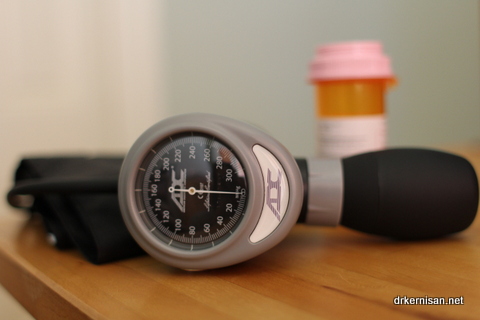
BP cuff & medicationsHave you had any concerns about an older person falling, or being at risk for a broken hip?

Falls are an important problem in aging adults, so I’d already been planning to discuss falls in the upcoming Geriatrics for Caregivers Q&A call on March 25th.

But coincidentally, a new clinical research study relevant to millions of older adults was just featured in the news.

The study, completed by a team of geriatrics researchers at Yale, found that in older adults aged 70 or older, taking blood pressure medication was linked to a higher risk of serious falls. (Serious falls as in, falls that caused an ER visit for a fracture, a dislocated joint, or a brain bleed. Serious stuff indeed!)

So, if the person you care for has a diagnosis of hypertension, and if you’ve had any concerns regarding falls or near-falls, these study results should be of interest to you.

In this post, I’ll review the key results of this study. Then I’ll tell you what I think are the most important practical take-aways for family caregivers.

This post will also include some practical tips to help you minimize the risk of your loved one experiencing a serious fall. [Read more…] about Blood pressure medications linked to serious falls: What you can do

Filed Under: Medical caregiving for elderly Tagged With: blood pressure, medication safety, medications

What the new blood pressure guidelines mean for older adults

January 10, 2014 By Leslie Kernisan, MD MPH

Are you caring for an older person with hypertension, also known as high blood pressure? Or does your parent take medication to lower blood pressure?

If so, then you should definitely learn more about the new guidelines for the treatment of high blood pressure, which were released by a well-respected expert committee on December 18, 2013.

This week, I wrote an article for you, explaining the key points of the new guidelines, and listing what caregivers can do to make sure their older loved ones aren’t being over-treated for high blood pressure (BP).

In my experience, many frail older adults are taking more BP medication than they need. This can cause falls or dizziness due to orthostatic hypotension, and one of the most common medication changes I implement as a geriatrician is the cutting back of blood pressure medications. (For more on orthostatic hypotension, see this article at HealthinAging.org, and also this FAQ I wrote about why elderly people get dizzy when standing up.)

If you want to read my full article on this topic, it was published yesterday on AgingCare.com, and you can find it by clicking this link:

What the New Blood Pressure Guidelines Mean for Caregivers

AgingCare.com only publishes articles that won’t be published elsewhere on the web, so I can’t post the whole thing here. But here are the highlights related to the new BP guidelines:

  • A higher target BP for adults aged 60 or older. The recommended goal BP is now less than 150/90, instead of less than 140/90 (which was the target recommended in prior guidelines, published in 2003).
  • A higher target BP for people with diabetes and/or kidney disease. The recommended goal BP is now less than 140/90, instead of less than 130/80.

What does this mean for you, if you’re caring for aging parents or other older persons? It means you should check on how their BP has been doing.  If it’s been much lower than the numbers above, you should consider discussing the BP medications with your parent’s doctor. This is especially important if you’ve had any concerns about falls or balance.

For specific recommendations on how to make sure your older loved one isn’t getting too much blood pressure medication, read my full article at AgingCare.com. I also offer tips on checking BP in this post: Why I Love Home Blood Pressure Monitors.

[Update March 2014: A recently published study found that older adults on BP medications have more serious falls. You can read my blog post about it here.]

Questions about medications in aging adults?

Would you like to learn more about how geriatricians manage medications in older adults? Or, do you have more questions about blood pressure medications in the elderly?

This month, I’ll be doing a free Q & A call on how geriatricians manage medications in aging adults. The call is scheduled for Tuesday, January 28th, at 12:30pm PST/3:30pm EST. Not sure you can join the call? Sign up anyway, and you’ll be able to listen to a recording of the call afterwards.

Filed Under: Medical caregiving for elderly Tagged With: blood pressure, medication management

Choosing & using a home blood pressure monitor, & what to ask the doctor

October 11, 2013 By Leslie Kernisan, MD MPH

In my last post, I wrote about some of the key reasons that I recommend older adults and their caregivers have a blood pressure (BP) monitor at home.

To very briefly recap:

  • Many of the problems of older adults (including falls) can be related to blood pressure.
  • Home blood pressure measurements can help:
    • evaluate for drops in blood pressure with standing (a common cause of dizziness in elders)
    • check for serious illness, since these often (but not always) cause the blood pressure and pulse to be very different from usual
    • follow-up on blood pressure after a change in medication, which can help doctors and families figure out the best medication dosing for an older person much faster. This is safer for elderly people.

In this post, I’ll share some tips on choosing and using a home BP monitor. (And don’t worry, I won’t tell you that you have to plan on checking every day for the rest of your lives…although there are times when it’s great to check daily — like the week after a change in medication — the most important thing is to have a good BP monitor at home and know how to use it at least occasionally.)

Tips for choosing a home blood pressure monitor

[Read more…] about Choosing & using a home blood pressure monitor, & what to ask the doctor

Filed Under: Medical caregiving for elderly Tagged With: blood pressure

Why I love home blood pressure monitors

September 20, 2013 By Leslie Kernisan, MD MPH

If I had to recommend one key piece of healthcare equipment that elders & caregivers should have at home, it would be this: a good home blood pressure (BP) machine.

Why? Because blood pressure measurements (and pulse measurements, which machines check at the same time) are an incredibly useful tool when it comes to assessing and optimizing an older person’s health and wellbeing. This is true even for those older people who aren’t being treated for hypertension (chronic high BP).

As I’d love for more elders and caregivers to understand how home BP machines can help them, in this post I’ll explain how home BP machines can be helpful specifically for older adults. Then in the next post, I’ll offer a few thoughts as to how to go about choosing one and using it.

How a home blood pressure monitor comes in handy

[Read more…] about Why I love home blood pressure monitors

Filed Under: Medical caregiving for elderly Tagged With: blood pressure

Footer

Disclaimer

The material on this site, including any exchanges in the comments section of the blog, is for informational and educational purposes only. Any comments Dr. Kernisan may make regarding an individual's story or comments should not be construed as establishing a physician-patient relationship between Dr. Kernisan and a caregiver, or care recipient. None of Dr. Kernisan's website or group information should be considered a substitute for individualized medical assessment, diagnosis, or treatment.
Creative Commons License
The Geriatrics for Caregivers Blog by Leslie Kernisan, MD MPH is licensed under a Creative Commons Attribution-NonCommercial-NoDerivs 3.0 Unported License.
Based on a work at drkernisan.net/blog.
Privacy & Disclosures

Dr. Leslie Kernisan MD

Telephone: 415-574-0545
Fax: 415-634-0204

P.O. Box 170376
San Francisco, CA 94117-0376

hello@drkernisan.net

Copyright © 2026 · Leslie Kernisan, MD MPH